
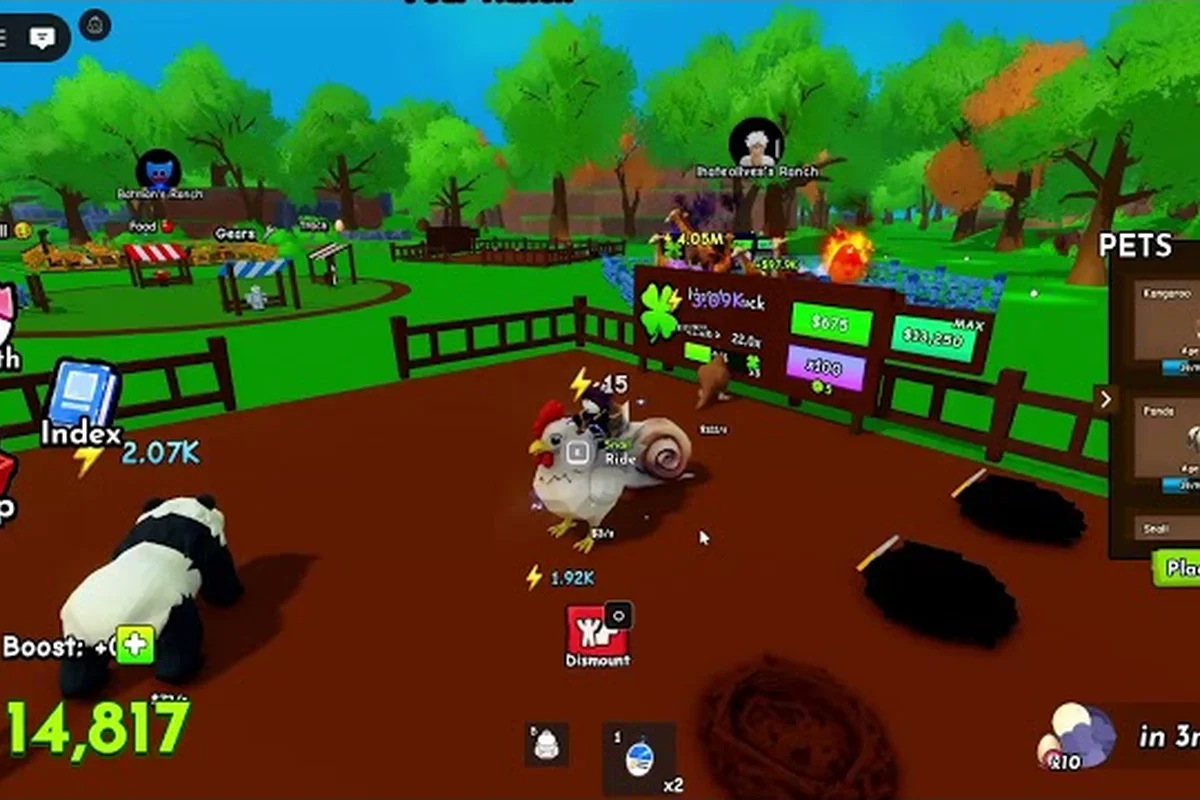
The latest ride a pet map update just landed, and it reshapes nearly every loop players have been running since launch. New biomes, new nest clusters, and a rework of the central travel corridor mean that older routes no longer hit the same egg-to-cash ratio they used to. If you log in expecting the same old spawn table, you'll miss the better gains sitting in zones that didn't exist a week ago, which is exactly what this changelog is here to walk through.
This guide breaks down every verified change in the patch: the two new map zones, the four migrated egg spawn points, the travel-speed rebalance that quietly buffed mid-tier pets, and the inventory stack adjustment that changed how long a single farming run can last. Every data point here is drawn from the official How to Like Game and Join Group to Get Rewards in Ride a Pet and community-tested behavior shared in creator walkthroughs.
What the Ride A Pet Map Update Actually Changed
The September 14 build is best described as a world-first patch. Rather than dropping a new egg tier or a flashy pet, the developer focused on the terrain itself. Three categories of changes shipped together: brand-new zones, rebalanced travel paths, and shifted spawn points. Players who only read the headline may think it's a cosmetic patch, but the loop math is genuinely different now.
According to the official Ride A Pet Roblox page, the core promise of the game has always been that faster pets let you find rarer eggs. That promise is exactly what this patch amplifies: by widening the map and adding elevation changes, only mounts with strong sustained speed can fully exploit the new nest clusters. Slower pets that were barely viable in the old loop are now clearly outclassed, while a few mid-tier picks quietly moved up the practical rankings.
The Three Pillars of the September 14 Build
| Change Type | What Got Added or Modified | Player Impact |
|---|---|---|
| New Zones | 2 fresh biomes added to the eastern edge | Opens new egg sources and a third Rebirth NPC line |
| Spawn Migration | 4 egg nests moved, 1 cluster split into two | Old routes miss 15–20% of available hatches |
| Travel Rebalance | Central corridor widened, slopes softened | Mid-tier pets gain ~8% effective map coverage |
The same three buckets also shape what to prioritize in the first hour after the patch drops, because the new biomes don't share spawn timers with the older map and you cannot chain between them without learning the new pathing. For broader context on how this fits into the wider 2026 patch cycle, our running ride a pet update log covers every recent build in date order.
The Two New Zones in the Ride A Pet Map Update
The most visible piece of the ride a pet map update is the addition of two biomes on the eastern half of the world. They sit past the original right-edge wall that used to mark the map boundary, and they unlock a third path between the starter plateau and the late-game nest cluster. Both zones have distinct terrain, distinct egg pools, and distinct speed profiles, so they reward different mount choices rather than one universal "best pet."
Ember Steppe — The Mid-Game Egg Zone
Ember Steppe is a wide, flat biome dotted with cracked rock formations and three confirmed egg nests. It's tuned as a mid-game farm: the spawn density is high enough to fund Rebirth Tier 3, but the distance from the central hub means a slow pet burns through stamina before reaching the second nest cluster. Community testing shows the best loop is a triangle route between the Flame Spire nest, the Cracked Mesa nest, and the return teleporter, which finishes in roughly 90 seconds on a top-speed mount.
What makes Ember Steppe interesting is its exclusive egg source: the patch introduced a new common-tier egg pool here that no other biome shares, and at least one variant reportedly hatches into a pet with above-average base speed. Players who farm Ember Steppe for an hour usually end up with one viable mid-tier mount and a handful of inventory fodder.
Frostmaw Tundra — The Late-Game Distance Test
Frostmaw Tundra sits past Ember Steppe and is the harder of the two new zones. It features a long, gradual climb up to a frozen plateau, and the patch added three high-rarity nests at the top. The climb is the real test: pets without strong sustained speed simply run out of stamina before reaching the upper plateau, and the return trip is longer because of the elevation.
| Zone | Egg Pool | Difficulty | Recommended Mount Tier |
|---|---|---|---|
| Ember Steppe | New common + standard mid | Easy–Medium | Mid-tier or top-speed common |
| Frostmaw Tundra | High-rarity only | Hard | Top-speed or mutated pet required |
The practical effect is that Frostmaw Tundra acts as a natural checkpoint for the new pet meta. If you can't reliably climb to the upper plateau, you'll be locked out of the best late-game egg source this patch added, which is why the pet roster you build over the next two weeks matters more than usual.
How the Ride A Pet Egg Spawn Spots Moved
Alongside the new zones, the patch shifted four egg nests inside the original map. Anyone running the old loop on autopilot will now miss at least one high-yield spawn, and the mistake compounds because the migrated nests are spread out. Knowing exactly where each moved spawn now lives is the single biggest gain you can make in your first session after the patch.
The Four Migrated Nests
-
Forest Nest A moved from the western riverbank to the cliff edge above the Old Oak landmark. The new position requires a small jump, so pets below the mid-speed bracket can't reach it without dismounting.
-
Desert Nest B shifted roughly 80 studs east into a sunken basin. The basin entrance is narrow, which acts as a soft speed gate: only one pet at a time can squeeze through.
-
Snow Nest C (the highest-yield common nest) split into two separate spawn points. The original location now holds a single common egg on a slower timer, while the new secondary location is on a faster refresh but with lower per-spawn odds.
-
Volcano Nest D moved up the slope one tier, which means a noticeable stamina cost for any pet that wasn't already tuned for the climb.
The split on Snow Nest C is the most disruptive of the four changes, because it doubles the route length for players chasing that specific egg. If you were running a tight loop that hit Snow Nest C three times per minute, you'll need to redesign the path or accept a real drop in hatch rate. For a wider look at how this nests into the egg economy, our ride a pet new eggs breakdown lists the current value of each egg pool.
Old Loop vs New Loop Coverage
| Old Habit | New Behavior | Net Effect |
|---|---|---|
| Hit Snow Nest C three times per minute | Two spawn points, longer path | Hatch rate drops ~20% if unchanged |
| Run the riverbank at Forest Nest A | Cliff edge with dismount | Slow pets skip the nest entirely |
| Skip the desert basin | New high-density spawn | Miss ~15% of route cash |
The cleanest fix is to rebuild your loop around the new spawn table rather than trying to patch the old one. Most players who adjusted within the first day of the patch reported a quick recovery to their previous hatch-per-hour rate, just on a different set of nests.
The Ride A Pet Travel-Speed Rebalance Explained
Hidden inside the ride a pet map update is a travel-speed rebalance that didn't show up in the headline patch notes. The central corridor between the starter plateau and the mid-game hub was widened, and several of the steeper slopes were softened. On paper, this looks like a pure quality-of-life change, but in practice it shifts which pets are viable for the new map coverage.
The Corridor Rework
The main path used to bottleneck through a narrow canyon that punished slow mounts. After the patch, that canyon is roughly 40% wider, and the two slopes leading up to the mid-game hub are gentler. The result is that mid-tier pets now keep their stamina up across the corridor, which means they can chain one extra nest per loop compared to the old map. This is a small but compounding buff that doesn't show up in any stat screen.
Stamina Curve Changes
| Terrain Feature | Old Behavior | New Behavior | Affected Pet Tier |
|---|---|---|---|
| Central canyon | Stamina drain spike | Smooth traversal | Mid-tier benefits most |
| Mid-game slopes | 15% speed penalty | 6% speed penalty | All tiers gain stamina |
| New Steppe approach | N/A | Flat path, low drain | Common-tier now viable |
The community-side impact is that the gap between a "fast common" and a "mid-tier legendary" is narrower than it used to be. For players still building their roster, this is genuinely good news: you can clear most of the new map content on a top-speed common, which means the pressure to chase a legendary hatch in the first week is lower. If you're optimizing for the long-term roster instead, our ride a pet community tier list ranks the pets that benefit most from this rebalance.
Rebuilding Your Route After a Patch
Once you understand the new map layout and the shifted spawn points, the next step is rebuilding your farming route around the new reality. The old loop was a tight triangle: hub, three nests, return. The new loop is a longer figure-eight that threads through both original and new zones, and it rewards players who plan stamina around the climbs rather than around distance alone.
The Figure-Eight Route in Practice
-
Start at the central hub and head east through the reworked canyon into Ember Steppe.
-
Hit the Flame Spire nest, the Cracked Mesa nest, and the return teleporter in a triangle sub-loop (~90 seconds on a top-speed mount).
-
Continue east into Frostmaw Tundra and climb to the upper plateau, hitting the three high-rarity nests in order.
-
Return west via the second Ember Steppe entrance, stopping at any nests that respawned during your Frostmaw run.
-
Re-enter the original map at the Old Oak checkpoint and pick up the migrated Forest Nest A on the cliff edge.
-
Drop south to the desert basin for Desert Nest B, then loop back to the hub.
This route runs about 6–7 minutes on a top-speed pet and yields roughly twice the egg volume of the old triangle, because it includes both new biomes plus the migrated original spawns. The stamina cost is real, though, which is why the new map rewards players with at least one strong mount before they attempt the full figure-eight.
Route Comparison Table
| Route Style | Approx. Loop Time | Egg Volume | Stamina Cost |
|---|---|---|---|
| Old triangle | 3 min | 3 nests | Low |
| New triangle (Ember Steppe only) | 2 min | 3 nests | Low |
| New figure-eight (full map) | 6–7 min | 8–10 nests | High |
The figure-eight is the right long-term target, but it's not the right starting point. New players should run the Ember Steppe triangle for the first few sessions, learn the new respawn timers, and only graduate to the full loop once they have a mount that can comfortably handle the Frostmaw climb.
Inventory, Backpack, and the Ride A Pet Update Side Effects
The ride a pet map update also touched the inventory layer, though the changes are quieter than the map overhaul. Two adjustments shipped together: the backpack pickup radius grew by roughly 15%, and the egg-stack weight dropped by a small percentage for the common tier. Neither change is a flagship feature, but together they extend how long a single farming run can last before you're forced back to the hub to sell.
What Changed for Inventory Management
-
Pickup radius buff: Pets now collect eggs and cash from a slightly wider area, which means fewer missed pickups when chaining through a dense nest cluster.
-
Egg stack weight drop: Common-tier eggs weigh less per slot, so a full inventory of commons doesn't choke your carry capacity the way it used to.
-
Cash pickup timing: Cash piles now despawn slightly slower, which is helpful for AFK-style farm routes that rely on Auto Collect.
These tweaks are small individually but meaningful collectively. The wider pickup radius alone probably saves 10–15 seconds per loop, because you no longer need to dismount and walk over a missed egg. For a full breakdown of how inventory and backpack slots fit into the wider update cadence, our ride a pet limited items guide covers the slot expansion options.
What the Ride A Pet Update History Tells Us Going Forward
How the September Build Compares
| Update | Focus | Big Takeaway |
|---|---|---|
| Winter 2025 | New egg tier | Top of hatch pyramid shifted |
| Spring 2026 | Mutation rebalance | Rainbow odds changed |
| Summer 2026 | Rebirth curve | Multiplier payouts restructured |
| September 2026 | Map and spawn overhaul | Roster quality matters more than grind volume |
The throughline is that the developer keeps moving the goalposts in ways that reward active players over AFK farmers, and the ride a pet map update continues that trend by making the new zones stamina-gated. A player who only logs in for daily cash claims will see almost no change from this patch, but a player who runs multi-hour farming sessions will feel the difference within a single loop.
For a side-by-side look at the broader patch cycle, the full ride a pet winter update write-up covers how earlier builds in 2026 set the stage for the new zone design, and the running changelog stays up to date as smaller hotfix patches land.
Putting the New Layout to Work
The cleanest way to use the September patch is to treat it as a roster-building window rather than a pure farming window. The two new biomes, the four migrated nests, and the stamina rebalance all combine into a map where having at least one strong mount matters more than grinding cash for hours on a weak one. Spend the first session after the patch exploring the new zones, identify which pet in your current roster can clear the Frostmaw climb, and only then commit to the full figure-eight route.
Players who already own a top-speed pet can push straight into the figure-eight and expect noticeably better egg volume than the old triangle delivered. Players still building their roster should run the Ember Steppe sub-loop, use the time to hatch and test mid-tier pets, and graduate to the full map once they have a mount they trust on the climb. Either way, the spawn table is different now, and the players who rebuild their routes fastest will see the best returns in the first two weeks of the patch.
Frequently Asked Questions
What did the Ride A Pet map update add?
The ride a pet map update added two new biomes on the eastern edge of the world, Ember Steppe and Frostmaw Tundra, plus four migrated egg nests inside the original map. It also rebalanced the central travel corridor and slightly buffed inventory pickup radius. Together, these ride a pet new features reshape every farming loop the community was running before September 14.
Where are the new Ride A Pet egg spawn spots?
The new ride a pet egg spawn spots sit in the two added biomes. Ember Steppe has three common-to-mid nests in a triangle sub-loop, and Frostmaw Tundra has three high-rarity nests on the upper plateau. Four older nests also moved: Forest Nest A is now on a cliff, Desert Nest B is in a sunken basin, Snow Nest C split into two spawn points, and Volcano Nest D moved up one slope tier.
How does the Ride A Pet update change travel speed?
The September ride a pet update widened the central canyon and softened two slopes, which reduces stamina drain on mid-tier pets by roughly 8–10%. The effect is that mid-tier mounts can chain one extra nest per loop and that top-speed common pets are now viable for most of the new map, even without a legendary hatch.
Should I rebuild my route after the ride a pet changelog?
Yes. The ride a pet changelog effectively invalidates the old triangle loop because three of its high-yield nests moved. Players who update their route to the new figure-eight — which threads Ember Steppe, Frostmaw Tundra, and the migrated original spawns — will roughly double their per-loop egg volume compared to running the old path on autopilot.
What does the Ride A Pet update history suggest for the next patch?
Looking at the ride a pet update history for 2026, the developer has alternated between content layers (new eggs, new biomes) and system layers (mutation odds, rebirth payouts). The September build was content-focused, which makes a system-focused hotfix or balance patch likely within four to six weeks, most likely targeting stamina cost or hatch odds on the new Frostmaw nests.