
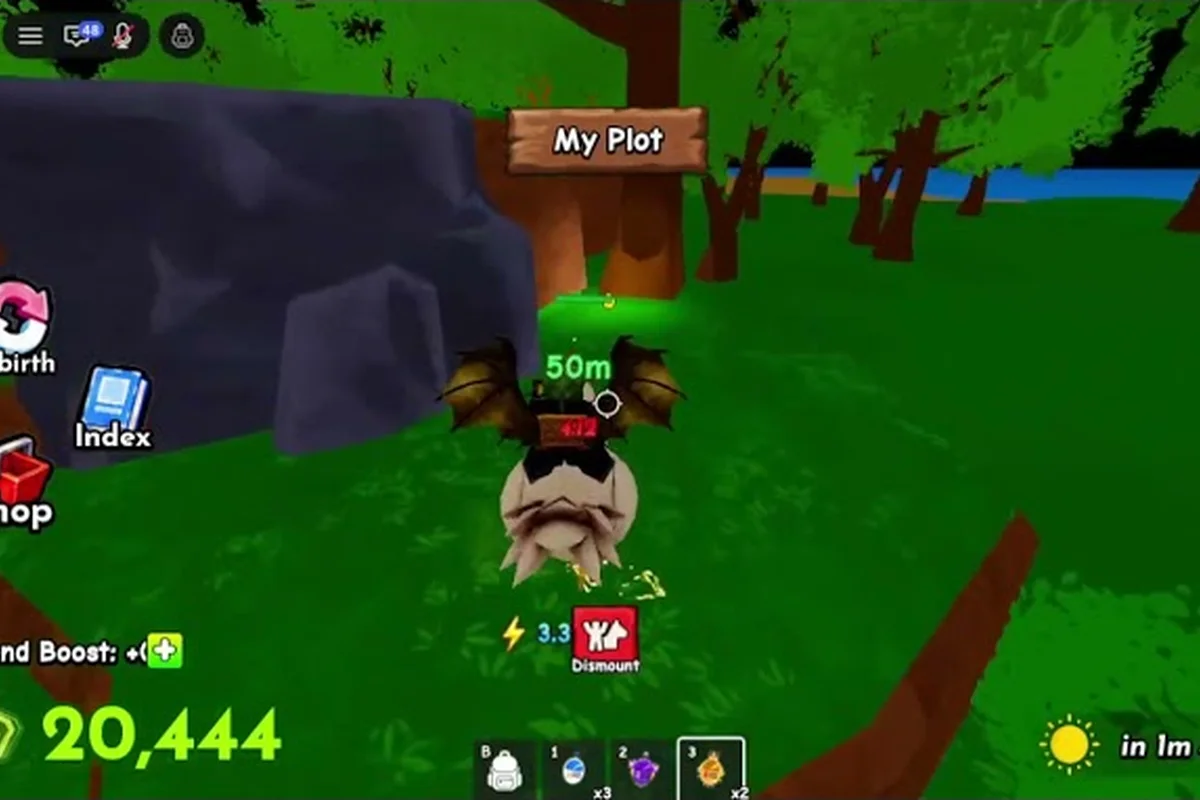
In Ride A Pet, every rare pet starts as an egg sitting in a nest somewhere on the map, and learning where those nests live is what separates a casual rider from a player who fills their collection in a single afternoon. The core loop is simple on paper — find a nest, ride to it, hatch what you find, then chase the faster mount that lets you reach the nests you couldn't get to before. The trick is that the extended Ride A Pet gameplay session does not publish exact nest coordinates, so the only way to build a reliable ride a pet egg nest route is to combine respawn timing, terrain reading, and an expanding sweep pattern. This guide breaks down where eggs tend to appear, how ride a pet egg respawn works between drops, and how to plan a hunt that rarely hits an empty nest.
How Ride A Pet Egg Nests Work on the Map
Before you start memorizing pins, it helps to understand what the game actually drops and where. Eggs in Ride A Pet are not bought from a vendor or rolled in a fixed machine — they appear as world objects in specific zones, and each zone tends to favor a particular rarity band. According to community observation shared in player walkthroughs, the egg map is roughly layered by Travel Distance, meaning the closer a nest is to spawn, the more common its drop, and the farther you push, the better your odds of pulling a rare egg.
Nest Types and What They Drop
There are a few recurring nest shapes players report, and recognizing them by sight is faster than reading prompts. Ground Nests are the low shrubs and grass tufts scattered around the starter ring, and they almost always drop common-tier eggs. Tree Nests sit on low branches or stumps a short ride from spawn and serve as the bridge between common and uncommon. Cave Nests appear inside rock outcrops and shaded alcoves further out, and these are where uncommon eggs become consistent. Summit Nests cap the highest ridges on the map, and the community broadly agrees that these are the main source of ride a pet rare eggs during normal play.
| Nest Type | Typical Location | Likely Drop Tier | Reachable Without Mount? |
|---|---|---|---|
| Ground Nest | Starter ring near spawn | Common | Yes |
| Tree Nest | Short ride from spawn | Common / Uncommon | Mostly |
| Cave Nest | Rock outcrops, mid-distance | Uncommon | No |
| Summit Nest | Highest ridges, far side | Uncommon / Rare | No |
| Event Nest | Limited seasonal spots | Variable | Depends |
A community walkthrough on YouTube (How to Get More Eggs and Pets in Ride A Pet) walks through these zones in order, and the visual pattern matches the table above — you can verify each nest type by its silhouette long before you read its label.
Why the Map Is Layered This Way
The layering is not cosmetic. Because Ride A Pet gates travel speed behind the mount you currently have, the only nests you can physically reach in your first hour are the ones the game expects beginners to find. As you hatch a faster pet, the radius of nests you can sweep in a single loop grows, and new egg bands open up behind it. This is why a complete egg list is best read alongside a map — the egg you want tells you how far you need to ride, and the map tells you which zones to prioritize for that egg's tier.
Reading the Ride A Pet Egg Respawn Cycle
Hitting a nest once is not the problem; the problem is that the nest goes empty, and the next ride a pet egg respawn window is what determines whether your hunt stays profitable. Players who farm for long sessions almost always plan around this cycle rather than around individual nest pickups.
How Respawn Behaves After Pickup
Once you collect an egg from a nest, that specific nest stays empty for a Cool-Down Period before it can drop again. Community testing suggests this window is roughly 5 to 8 minutes per nest, though the exact figure is not posted officially and may shift between updates. During the cool-down, the nest object is still visible on the map, but interacting with it does nothing. Two nests of the same type, however, do not share a cool-down — each one ticks independently, which is why a wide sweep beats camping a single spot.
| Nest State | What You See | Interaction Result |
|---|---|---|
| Ready | Normal mesh, idle animation | Egg drop on contact |
| Cool-Down | Same mesh, no prompt | Nothing |
| Refreshed | Brief visual flicker | Egg drop on contact |
Planning Around the Window
A good rule of thumb, based on player reports, is to treat one full loop of all visible nests in your current band as a 10 to 12 minute circuit. By the time you finish the loop and return to your first nest, the cool-down will have expired and the next ride a pet egg respawn will be live. If you have a faster mount, you can compress this to 7 to 9 minutes, which is roughly when egg hunting starts to feel like a real grind rather than a slow stroll.
Plotting a Circuit That Hits Every Nest
Without official coordinates, the practical tool you can build is a personal egg map that grows as you explore. The goal is not to memorize a fixed path but to maintain a layered sweep so that you always have a fresh batch of nests waiting when you finish your current loop.
The Expanding Circle Method
The most reliable community technique, shown in the extended Ride A Pet gameplay session, is the Expanding Circle Sweep. You start at spawn, ride outward in a spiral, and tag every nest you find in a personal list grouped by distance band. Each time you upgrade your mount, you push the outer ring of your sweep one band further out, and the nests you already mapped remain part of your rotation.
| Band | Radius From Spawn | Main Nest Types | Recommended Loop Time |
|---|---|---|---|
| Inner | 0 to 200 units | Ground, Tree | 3 to 4 minutes |
| Middle | 200 to 500 units | Tree, Cave | 5 to 7 minutes |
| Outer | 500+ units | Cave, Summit | 7 to 10 minutes |
Multi-Band Rotation
Once you have two or three bands mapped, the practical move is to rotate between them instead of exhausting one at a time. Because ride a pet egg respawn timers tick independently, alternating bands keeps at least one nest ready in every loop. A common pattern is Inner → Outer → Middle → Outer → Inner, which keeps the longer rides in the middle of the session and the quick pickups at the start and end where fatigue is lowest.
Ride A Pet Egg Hunting Patterns That Actually Work
The difference between players who fill their collection in an afternoon and players who wander for hours usually comes down to two or three concrete habits. None of them require paid currency, and all of them stack with the mount upgrades you earn naturally.
Sweep Wide, Not Deep
Picking one direction and pushing as far as your mount allows sounds efficient, but it almost always wastes time. The map is denser near the middle rings, and the nests there have the shortest cool-down overlap with your starting point. A wide sweep that covers all visible nests in a band before stepping outward will, on average, yield 2 to 3 times more pickups per loop than a deep run, according to player-reported session data.
Time Your Hatches, Not Just Your Pickups
Hatching takes time, and most players hatch on the spot, which stops their mount and breaks their loop. The stronger play is to stack two or three eggs before starting a hatch, so the cooldown on your movement overlaps with the incubation timer. Players who do this consistently report gaining an extra nest pickup every two loops, simply because they are not standing still while a single egg finishes.
Read the Map Edge, Not the Center
Rare nests rarely sit on the obvious paths. They tend to sit one screen away from the main route, often behind a rock wall or just past a ridge. When you are about to give up on a band, ride the edge of the map rather than the center, and you will frequently find a Summit or Cave nest that the rest of the lobby walked past.
Ride A Pet Rare Eggs: Where to Push First
Once your mount is fast enough to reach the outer bands, the question stops being "where is the nearest nest" and becomes "which band has the best rare egg odds right now." This is where ride a pet rare eggs stop being a rumor and start being a planning target.
Priority Bands for Rare Hunts
| Band | Rare Egg Rate (Community Estimate) | Best For |
|---|---|---|
| Inner | Low | Volume hatching, common collection |
| Middle | Moderate | Filling the uncommon gap |
| Outer | High | Targeted rare egg hunts |
Riding Smarter to Reach the Outer Bands
The catch is that the outer band is gated by mount speed, and most players underestimate how much a single speed tier changes their reach. A focused look at how to get a faster pet in Ride A Pet is often a better use of an hour than another loop on the same mount, because the speed upgrade permanently opens the nests you were skipping. Treat mount progression as a route unlock, not a cosmetic bonus, and your ride a pet egg hunt guide will keep paying off long after the first rare egg drops.
Frequently Asked Questions
How long does a Ride A Pet egg nest take to respawn after pickup?
Each nest runs an independent cool-down of roughly 5 to 8 minutes after you collect its egg, based on community testing. Nests of the same type do not share this timer, so rotating between several nests keeps at least one ready at all times during a long hunt.
Where is the best place to find rare eggs on the egg map?
The outer ring of the map, especially Summit Nests on the highest ridges and Cave Nests in shaded alcoves, has the highest community-reported rare egg rate. Reaching them usually requires a mid-tier or better mount, so investing in speed is the unlock that opens rare farming.
Should I hatch eggs immediately or wait?
Stacking two or three eggs before starting a hatch is more efficient than hatching on the spot, because the cool-down on your mount overlaps with the incubation timer. Players who batch their hatches report squeezing an extra nest pickup into every two loops on average.
Does the Ride A Pet egg respawn timer change between updates?
The exact cool-down is not published officially, and players have seen small shifts between patches. Treat the 5 to 8 minute figure as a working estimate, and re-time your loop if a recent update seems to push the window longer or shorter.