
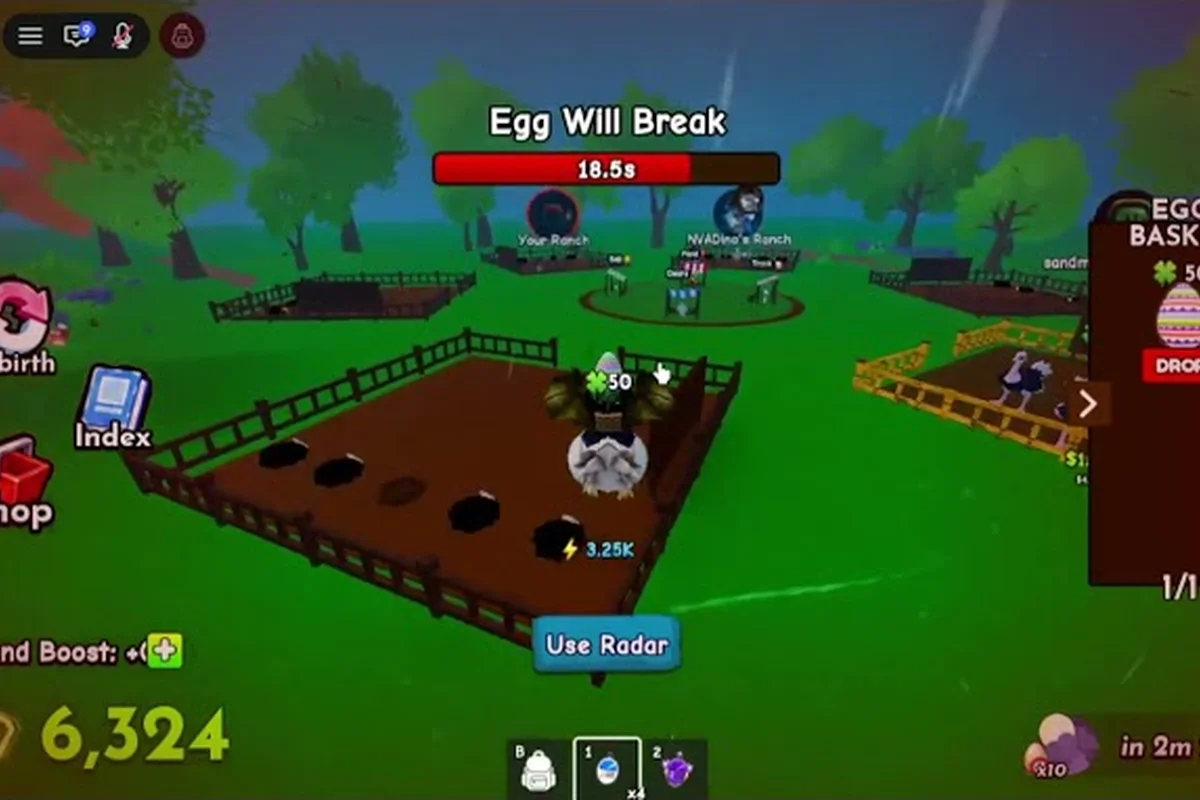
The Real Ride A Pet Cash vs Pets Tradeoff
Every new player in Ride A Pet eventually stares at their inventory and asks the same question: should I keep hatching more pets, or should I just stack the cash I'm already earning? The Ride A Pet cash vs pets debate is misleading at first because the two resources look interchangeable, but they actually compound on each other in a very specific way. Cash is what funds hatching, but pets — specifically faster ones — are what determines how much cash you can collect per minute, so swapping one for the other at the wrong moment starves your income.
According to the the Ride A Pet developer's Roblox profile, the loop is built on travel speed: faster mounts reach more nests per circuit, which produces more eggs, which produce more pets, which (when managed correctly) produces more cash. That makes the cash vs pets question a sequencing problem, not a binary choice — the wrong answer at the wrong stage of progression feels identical to a soft paywall until you understand the multiplier chain.
This guide breaks down each side of the tradeoff, then shows you how a practical Ride A Pet cash grind combines both resources instead of treating them as rivals. If you want the raw earning routes in one place, the Ride A Pet money making guide covers the fastest-cash methods in detail.
Why Cash and Pets Are the Same Conversation in Ride A Pet
The official loop is cash → egg → speed → more cash
The developer-built progression chain in Ride A Pet is simple on paper and brutal in practice. You earn Cash (the dollar-sign currency) by riding your active mount through nests, hitting free reward buttons, and claiming map pickups. That cash buys eggs from progressively better zones. Better eggs hatch into faster pets, and faster pets cover more ground per minute, which feeds more cash back into the same loop. The community walkthrough on earning cash and rebirthing fast repeatedly emphasizes that the loop is throughput-driven, not luck-driven, and that every minute spent staring at a slow mount is a minute you're losing cash at a known rate.
This is why the cash vs pets framing is so persistent in player discussions. They are not two separate resources; they are two views of the same throughput equation. A pet that doubles your movement speed effectively doubles your cash income, so selling that pet for an immediate cash injection only makes sense if you have a faster mount ready to take its place — otherwise you've converted a permanent multiplier into a one-time payout.
The real metric is cash per minute, not cash in your wallet
Most new players optimize for the number in the corner of the screen. Experienced players optimize for Cash Per Minute (CPM), which is a moving target that depends on your current mount, your current zone, and whether you've claimed the free reward buttons for the day. Two players with the same wallet total can have wildly different CPMs, and the gap between them grows every minute.
The table below reframes the ride a pet cash vs pets question as a CPM comparison, and the result is counterintuitive: the lump-sum row looks strongest on immediate cash but the slowest on the hour-by-hour climb, while a modest egg purchase that upgrades your mount often pays for itself in under half an hour. Looking at the CPM After Action column, you can see why the obvious answer — sell everything — is usually wrong, because every transaction trades long-run speed for a short-run number that quietly drags down your entire cash grind for the rest of the session.
| Strategy | Immediate Cash | CPM After Action | Net Effect on Hourly Income |
|---|---|---|---|
| Sell a rare pet for lump cash | +High | Drops (slower mount) | Negative — slower runs for hours |
| Keep rare pet, hatch a new egg | -Medium | Stable (same speed) | Neutral — no multiplier change |
| Buy egg with stored cash | -High | Rises if new pet is faster | Positive — pays back over 20-40 min |
| AFK in zone with auto-collect | +Slow trickle | Stable | Positive but small — long-game only |
The "sell everything" instinct looks good on row one and bad by row four, which is why the ride a pet cash vs pets answer almost always comes down to "keep the multiplier, convert only the dead weight." In practice that means selling common duplicates clogging your inventory for pocket change while holding onto the rare that doubles your mount speed, since losing a 2x mount to chase a one-time lump sum quietly costs you more CPM over a two-hour session than the sale ever returned. Tie that rule to the AFK auto-collect row and the math tightens further: anything that doesn't directly raise your current mount's speed or your zone's cash drop rate should be liquidated on sight, because storage space and slot upgrades in ride a pet are themselves a CPM lever most grinders overlook.
The Two Sides of the Cash vs Pets Decision
When selling pets for cash actually wins
Selling pets for immediate cash is the right call in a narrow set of circumstances. The first is the very early game, when every egg costs a meaningful slice of your wallet and your current mount is already fast enough to clear every nest on the map. At that point, the marginal value of a new pet is low, and converting duplicate hatches into egg money accelerates your route to the next zone tier.
The second situation is the opposite: when you're at a hard ceiling where no available egg will improve your speed, and a brand-new mount is gated by a Robux purchase. Selling your current stable for lump cash and accepting a slower temporary mount lets you stockpile for the next progression gate, as long as you understand the CPM cost. The third is inventory pressure — Ride A Pet doesn't have infinite pet slots, and managing your stable is part of Ride A Pet auto collect cash hygiene, because a full inventory means new hatches disappear before you can decide what to do with them.
When stacking pets crushes the cash route
Stacking pets wins whenever your current zone rewards movement speed. The marginal value of a faster mount in a wider zone is enormous, because each new nest you can reach adds to your CPM without costing you anything. Community data shared in the developer community shows that players who skip the "sell everything" temptation and instead reinvest egg cash into the next egg tier report noticeably faster progression, especially in mid-game where the speed gap between mount generations is widest.
There's also a quiet compounding effect: each faster pet reduces the time you spend in low-yield zones, which is where most AFK cash sessions happen. That means Ride A Pet AFK cash returns scale with your mount speed, and the player who stacked pets early gets to AFK in better zones later.
| Player Archetype | Action | Short-Term Cash | Long-Term CPM |
|---|---|---|---|
| Speed-first | Keep rare pets, buy next egg | Lower wallet | Higher sustained income |
| Cash-first | Sell duplicates, hoard dollars | Higher wallet | Slower runs, lower ceiling |
| Balanced | Keep speed pets, sell cosmetic duplicates | Medium wallet | Medium CPM, stable progression |
| AFK grinder | AFK in high-CPM zone, sell for upgrades | Slow but steady | Best at scale, weak early |
Ride A Pet AFK Cash and Auto Collect: The Patience Route
How AFK cash actually works
Ride A Pet AFK cash is a real strategy, but it's a late-game one, not an early-game shortcut. The mechanic is simple: you leave your character in a zone with auto-collect enabled, and the game tallies cash pickups over time. The deeper reality is that AFK returns are proportional to your mount's movement radius and your zone's nest density, which is why a slow mount in a starter zone earns almost nothing per hour.
The honest way to think about AFK cash is as a multiplier on what you already have. If your CPM while active is 1,000, your AFK rate is a small fraction of that — call it 5-15% depending on the zone and your pet's passive range. Players who try to AFK their way to a better mount end up grinding for hours just to buy one egg, while players who AFK after upgrading their mount see the same hours produce several eggs' worth of value. The trick is to use AFK time as a supplement, not a foundation.
Where auto collect cash fits in
Ride A Pet auto collect cash is the toggle that lets your mount scoop up nearby pickups without you actively steering. The community walkthrough highlights auto-collect as the single biggest quality-of-life unlock, because it converts semi-AFK sessions into real income. Without it, you're forced to chase every pickup, which makes long sessions tedious and burns out faster than the cash justifies.
Where players misread the mechanic is in expecting auto-collect to replace active grinding. It does not. Auto-collect scales your active CPM by maybe 10-20% in dense zones and dramatically more in sparse ones, but it does not unlock new zones or new egg tiers on its own. Think of it as a passive buff layered on top of an already-fast mount, not a substitute for one.
The table below ranks each cash source in the Ride A Pet economy by how well it pairs with your mount's auto-collect toggle, so you can see at a glance which methods reward the AFK-style pickup vacuum versus the ones that still demand manual steering. Rows like "Map sweep (active)" lean heavily on a fast mount and active play, while "Auto-collect pickups" treats the toggle as the core feature rather than a bonus buff. The "Auto-Collect Synergy" column is the key differentiator for players optimizing their CPM during long semi-AFK sessions, since it separates strategies that scale with the toggle from those that ignore it entirely.
| Cash Source | Active CPM | AFK Rate | Auto-Collect Synergy | Best For |
|---|---|---|---|---|
| Map sweep (active) | High | None | Medium | Players with fast mounts |
| Auto-collect pickups | Medium-High | Low-Medium | Core use case | Long semi-AFK sessions |
| Free reward buttons | One-time payout | N/A | N/A | Every account, every day |
| Egg sale → cash | Immediate | N/A | N/A | Inventory dumps only |
| Hatch and keep | Negative | Boosts future CPM | Indirect | Stacking multipliers |
Building a Ride A Pet Cash Grind That Uses Both Sides
A practical daily loop
A workable Ride A Pet cash grind looks less like a strategy and more like a checklist you run in order. Start every session by claiming the free reward buttons — like the game, join the group, join the Discord — because those are permanent one-time payouts you only get once per account, and missing them is pure waste. Then check your stable and sell any cosmetic duplicate that is strictly slower than your current mount, because carrying them costs you inventory space without changing your CPM.
After cleanup, sweep the map once on your best mount, with auto-collect enabled, to bank a baseline cash deposit. Use that deposit to buy the best egg you can afford in the current zone. If the hatch is faster, equip it and repeat the loop; if not, sell it and bank the cash for the next tier. This is the loop the community video on cash and rebirth speed recommends, and it works because every step either preserves or increases your CPM.
Stage-by-stage decision rules
The right ride a pet cash vs pets answer shifts at every rebirth tier, so a single rule of thumb breaks down. Early on, hatching every egg for a speed multiplier compounds into your best auto collect cash and AFK cash returns, while hoarding coins into the next egg tier too early starves the multiplier curve. By reborn 5, the gap between a top-tier pet and a cash-funded upgrade matters more than mass hatches, which is why the table below front-loads pet strategy and back-loads spending on coin upgrades.
| Stage | Cash Strategy | Pet Strategy | Why |
|---|---|---|---|
| Tutorial → 1st rebirth | Spend freely on next egg | Keep every hatch | Speed gains are largest here |
| Mid-game (reborn 2-5) | Mix: save half, invest half | Sell cosmetic dupes | CPM gap still wide, but cash gates matter |
| Late mid-game (reborn 5-10) | Hoard cash for next egg tier | Keep only top speed pets | Eggs get expensive, multipliers plateau |
| Endgame (reborn 10+) | Spend on upgrades, AFK the rest | One optimized pet | Diminishing returns on more hatches |
Notice how the cash side of the decision grows as you progress, while the pet side of the decision shrinks. That is the natural shape of the Ride A Pet cash vs pets tradeoff: pets front-load the multiplier, cash back-loads the compounding.
Common mistakes that look like progress
A few patterns look productive but quietly drain your CPM. The first is selling your current mount to fund a "maybe faster" egg, then failing the hatch and having no mount at all. The second is hoarding so many pets that you stop noticing which one is actually equipped, which makes your AFK sessions return less than they should. The third is ignoring the free reward buttons because they look small, when in practice they pay for several starter eggs on a fresh account.
The fourth, and most common, is treating AFK cash as the main strategy before you have the mount to make it work. If you want a clean walkthrough of the earning routes in priority order, the Ride A Pet how to get cash guide lays out the same loop with more detail on the early game.
How to Use Mounts and Pets to Multiply Your Wallet
Speed is the only stat that scales every cash source
Every other pet stat in Ride A Pet is conditional — it helps in some zones, with some eggs, against some conditions. Movement speed is the only stat that multiplies every cash source at once. A 20% speed boost doesn't just make one pickup faster; it makes your map sweep shorter, your AFK session more productive, and your hatch loops quicker. That is why experienced players sort their stable by speed first and everything else second.
If you want a deeper look at how the pet side of the equation actually grows, the Ride A Pet how to get pets fast guide breaks down hatch rates, drop locations, and the best zones to grind in. Combining that pet knowledge with the cash rules above is what separates a slow grind from a compounding one.
Rebirths reset your wallet but not your knowledge
Rebirth is the cleanest expression of the cash vs pets tradeoff. You spend most of your stored cash and most of your current pets to reset progression, and in return you unlock a permanent multiplier. The trick is to time rebirths when your current CPM is about to plateau anyway, not when you have a sweet mount you'd be giving up. Players who rebirth at peak speed waste the multiplier, while players who rebirth at a plateau convert dead-end progression into a permanent boost.
A useful rule of thumb: track your last three eggs in a log and watch the pattern. If all three hatched into a higher-tier mount, your pet RNG is hot, so delay the rebirth and keep grinding eggs to compound your current CPM before the multiplier window expires. If all three were repeats or downgrades, your mount pool is drained and the fastest CPM gains are gone, making a rebirth into a new egg tier the stronger play even at a lower cash floor. Concretely, players who rebirth after a 3-egg dry streak typically recoup the lost wallet within two new-tier egg cycles, since the permanent egg multiplier stacks on top of any future hatched mount rather than today's stalled ones.
Ride A Pet Cash vs Pets: Which Side Are You On?
The Ride A Pet cash vs pets answer is the same at every stage: keep the multiplier, convert only what doesn't compound. Selling your fastest mount for egg cash is a loan against your future income, and the interest rate is brutal. Selling cosmetic duplicates, by contrast, is free CPM with no repayment, because those pets were never going to be equipped.
If you're early, lean almost entirely on pets and treat cash as a tool to buy the next egg. If you're mid-game, balance the two and use cash to bridge the gap between mount generations. If you're endgame, lean on cash and AFK, because your pet side has plateaued and the multipliers now come from rebirths and AFK uptime. A broader overview of how all these systems fit together is in the Ride A Pet full guide, which maps the progression chain from tutorial to endgame.
The honest summary is that the best Ride A Pet money making pets are the ones that keep you moving, and the best Ride A Pet cash grind is the one that funds your next speed upgrade without raiding your current mount. Once you internalize that loop, the cash vs pets debate stops feeling like a debate at all.
Frequently Asked Questions
Is selling pets for cash ever worth it in Ride A Pet?
Yes, but only for cosmetic duplicates that are strictly slower than your equipped mount, or when you're at a hard speed plateau and need to stockpile for a Robux-gated next tier. Selling your fastest active mount almost always costs you more in lost CPM than you gain in cash, because the mount's speed multiplier compounds across every future run.
What is the fastest way to get cash in Ride A Pet?
The fastest ride a pet how to get cash fast route is to claim the free reward buttons first, then sweep the map on your best mount with auto-collect enabled, then funnel the cash into the best egg you can afford. That sequence beats raw AFK grinding because each step raises the next, instead of repeating the same low-CPM loop for hours.
Do AFK cash and auto collect actually work?
They do, but only as a layer on top of an already-fast mount. Ride a pet AFK cash returns scale with your zone and your pet's passive range, so AFK in a starter zone with a slow pet earns very little. Ride a pet auto collect cash works best in dense late-game zones where the toggle can scoop up most pickups without you steering.
Which pets make the most cash in Ride A Pet?
The ride a pet money making pets worth keeping are the ones with the highest movement speed, full stop. Other stats help in narrow conditions, but speed is the only multiplier that raises every cash source at once, so the best cash-making pet is almost always your fastest one — not the one with the rarest cosmetic or the biggest special effect.