
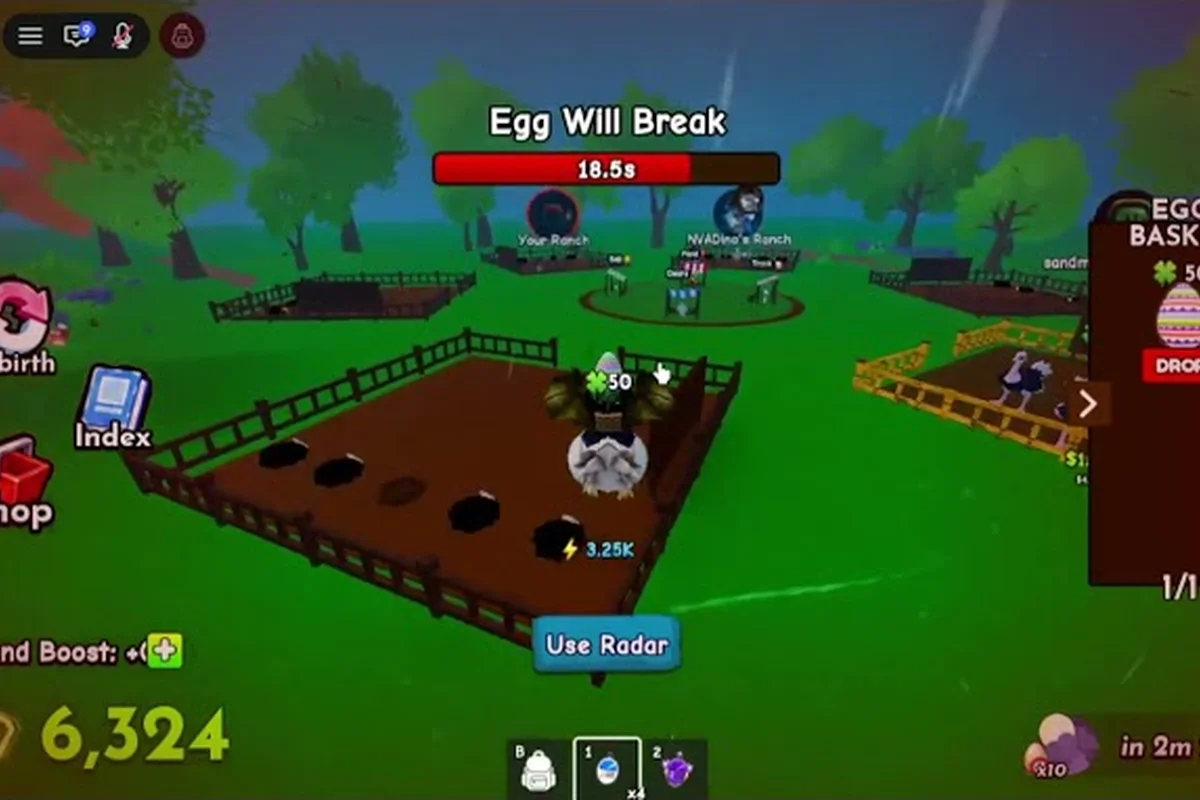
Hitting the ride a pet cash cap is a wall most players slam into before they ever see a legendary hatch. You grind, you stack pets, you pocket what feels like a mountain of dollars, and then the game silently stops counting. Knowing the max wallet limit, the right time to sell pets, and the real pet prices behind each rarity tier is the difference between grinding efficiently and bleeding cash into eggs that never pay you back. This guide breaks down everything that decides your ride a pet max cash ceiling so every dollar you earn actually moves your account forward.
How the Cash Cap Limits Late-Game Earnings
The ride a pet cash cap is the soft ceiling your wallet can hold at once. Once you cross it, extra income from hatching, selling, or completing laps does not visibly stack on top of your balance — the counter plateaus until you spend. The cap exists to keep the in-game economy from spiraling, and it makes the question of "what do I do with my money" more important than "how do I get more money." Players who ignore the cap effectively throw away hours of grind because the surplus evaporates the moment the wallet hits its maximum.
The wallet is shown with a dollar sign in the HUD, and community testing shows that travel speed is the single biggest multiplier on how fast you reach the ride a pet cash cap in any given session. The faster your active pet runs, the more nests you clear per circuit, the more pets you hatch, and the more cash you can recycle into upgrades before the wall hits again. According to the earning cash and rebirthing fast in Ride A Pet, the core loop is explicitly built around hatching faster pets and mutating for more speed, which means money and movement are the same conversation — any cash you cannot reinvest into speed is a dead end.
Why the Cap Matters More Than Raw Income
A high cash cap without a plan is just a bucket with a small hole in the bottom. Players who push toward the ride a pet max cash threshold without a clear spending target — usually speed, mutations, or a higher egg tier — find that they "earn a lot" but "have nothing to show for it." The cap forces a decision: spend the wallet down before the grind session ends, or lose the surplus to the ceiling.
The cap also changes the priority order of upgrades. A player with 50% wallet headroom can safely buy a small mutation; a player sitting at 95% of the ride a pet cash cap needs to spend immediately or lose the next several minutes of income. Planning your spending around the cap means you always have room to absorb a lucky hatch or a streak bonus, which compounds over the course of a long session.
Cap Behavior and Reset Patterns
Community data suggests the ride a pet cash cap is a per-session or per-balance soft cap rather than a hard server-wide limit, but the practical effect is the same: once you sit at the ceiling, only spending moves the needle. Rebirthing, which resets much of your progress in exchange for permanent multipliers, is one of the few mechanics that interacts with the cap in a structured way, and it is the primary long-term lever for raising your effective ceiling.
Players who rebirthe strategically — emptying the wallet into the best egg they can afford right before the reset — consistently report climbing the ride a pet max cash ladder faster than players who grind endlessly without rebirthing. The cap, in other words, is not your enemy. It is a forcing function that punishes hoarding and rewards the player who treats every dollar as a tool.
Pet Prices and What Each Rarity Is Actually Worth
The single biggest factor in how fast you hit the ride a pet cash cap is the sell value of the pets in your inventory. Pet prices scale with rarity, and a handful of legendaries can fill your wallet in a single lap, while a stack of commons will barely move the counter. This is why most experienced players run a "fodder" loadout of cheap pets they are willing to sell on cooldown and a small bench of high-rarity pets they never touch.
Sell Value Tiers at a Glance
The table below summarizes approximate sell values reported by players for each rarity band. Exact numbers can shift with patches, but the ordering is stable: higher rarity, higher ride a pet pet prices, and therefore a faster path to the ride a pet cash cap.
| Rarity | Approx. Sell Value | Role in Your Loadout | Recommended Action |
|---|---|---|---|
| Common | Very Low | Fodder for early hatching | Sell on sight to fund next egg |
| Uncommon | Low | Short-term carry pets | Sell duplicates, keep one |
| Rare | Moderate | Mid-game speed boost | Sell only when overcapped |
| Epic | High | Main carry candidate | Hold, sell only at cap |
| Legendary | Very High | Endgame speed engine | Never sell unless rebirthing |
| Mythic | Extreme | Long-term flex | Permanent bench slot |
How Rarity Translates to Per-Lap Income
Because pet prices scale so steeply, the composition of your active roster changes your effective income far more than the time you spend grinding. A player running three legendaries will hit the ride a pet cash cap in a fraction of the time it takes a player running three commons, and the legendary player also clears more nests per lap because each pet is faster. Income and speed reinforce each other, which is the central feedback loop the game is built around.
The practical takeaway: stop filling your slots with commons the moment you unlock your first rare, and stop filling them with rares the moment you unlock your first epic. Each tier upgrade is a structural improvement to your grind speed, not just a vanity swap, and it is the cheapest way to push the ride a pet max cash ceiling upward in real terms.
How to Sell Pets and When to Do It
The mechanics behind ride a pet sell pets are intentionally simple, which is exactly why so many players get the timing wrong. You can sell from your inventory at almost any moment, the game credits your wallet instantly, and there is no cooldown. That accessibility is a trap if you sell at the wrong time, because every pet you sell is one fewer pet earning income on your next lap.
The Right Time to Sell
The decision of when to sell follows a short checklist. Most players default to selling the moment they pick up a duplicate, but the optimal play is usually to hold duplicates until you are about to hit the ride a pet cash cap and need the headroom.
| Trigger | Sell? | Why |
|---|---|---|
| Duplicate of a pet already on your roster | Yes (usually) | No incremental value from hatching another |
| Low-tier common filling a slot | Yes | Replace with whatever you just hatched |
| High-tier pet at full wallet | Yes | Prevent cap overflow on next lap |
| Your only copy of a fast pet | No | Speed loss outweighs cash gain |
| Right before a rebirth | Sell (selectively) | Empty wallet converts to multipliers |
Step-by-Step Selling Flow
The ride a pet how to sell pets flow is the same for every rarity, and it pays to learn the muscle memory so you are not fumbling through menus while a lap is on the clock. According to the community walkthrough on earning cash and rebirthing fast in Ride A Pet, players who pre-stage their sell decisions — knowing which pets they will dump before they even open the menu — clear inventory roughly twice as fast as players who evaluate each pet on the spot.
-
Open the inventory panel from the HUD while idle at a nest.
-
Filter or scan for the lowest-rarity pets first, since these are almost always the correct sells.
-
Hold the sell input and confirm only when the wallet has at least 20% headroom below the ride a pet cash cap.
-
Close the menu and immediately resume your circuit so the freed-up time is reinvested into the next nest.
Selling vs. Keeping for Mutation Stock
One nuance that catches new players: not every rare pet should be sold just because it duplicates a role. Some pets are valuable as mutation fodder because their base stats or hidden modifiers make them better parents for future hatches. If you are early in the game and your inventory is small, the rule of thumb is to sell duplicates, but once you start chasing mutations, keep at least one spare of each tier above Rare so you have options when the mutation altar offers you a choice. This is the one place where ride a pet pet prices and ride a pet selling guide advice diverge — pure cash flow says sell; long-term mutation strategy says bank.
Egg Prices and the Real Cost of Pushing the Grind
Eggs are the biggest recurring sink in the game, and ride a pet egg prices are the single most important number to internalize if you want to approach the ride a pet cash cap with intent. Every egg you buy is cash you are not selling, and the difference between an efficient egg buyer and an inefficient one is usually which egg tier they are buying at, not how often they are buying.
Egg Price Tiers Compared
Ride a pet egg prices scale with the rarity ceiling of the hatch. A basic egg costs almost nothing but yields almost no long-term value, while the top-tier eggs cost a meaningful slice of your wallet but can drop a legendary that fills the ride a pet cash cap on its own. The table below reflects approximate community-reported price bands and is the kind of data most players have to learn the hard way.
| Egg Tier | Approx. Cost | Expected Hatch Ceiling | Buy Signal |
|---|---|---|---|
| Basic Egg | Very Low | Common / Uncommon | Only at the start of a session |
| Forest Egg | Low | Uncommon / Rare | Default buy once commons dry up |
| Desert Egg | Moderate | Rare / Epic | Buy when wallet > 60% of cap |
| Ice Egg | High | Epic / Legendary | Buy only when wallet is near cap |
| Volcanic Egg | Very High | Legendary / Mythic | Buy only right before rebirth |
How Egg Choice Changes Your Cash Curve
If you want a deep reference for the egg-side of the economy, the best egg to hatch in Ride A Pet breakdown maps each egg tier to the speed milestones you need to clear it efficiently. A player buying Volcanic eggs with a Common-tier pet is burning through the ride a pet cash cap for nothing, while a player buying Forest eggs with an Epic carry is compounding value every lap.
The most common mistake is upgrading egg tier too early. Players see a flashy egg in the shop and dump 70% of their wallet into it, only to hatch commons that they then have to sell back for a fraction of what they paid. The disciplined play is to keep buying the egg tier one step below the one you can comfortably afford, grind until you are sitting at the ride a pet cash cap, and then take a single calculated swing at the next tier. If it pays off, your cap pressure drops dramatically; if it does not, you have only burned the surplus, not your core wallet.
Combining Egg Spend with Rebirth Timing
Rebirths are the long-term answer to the ride a pet cash cap, and the smartest cash players time their egg purchases to land just before a rebirth. The pattern looks like this: grind your wallet up to roughly 80% of the cap, buy the best egg you can afford with that 80%, hatch whatever you get, sell any duplicates to clean the inventory, then rebirth. The rebirth converts your leftover balance and your session progress into permanent multipliers, which means the cash you spent on the egg is converted into long-term speed instead of disappearing into the cap. This is the heart of any ride a pet selling guide worth reading: do not treat cash and eggs as separate systems, treat them as a single cycle.
Building a Cash-First Route to the Max Wallet
Approaching the ride a pet max cash ceiling efficiently is less about grinding longer and more about routing the grind so every action compounds. The fastest cash routes all share three traits: a single high-rarity carry pet, a small bench of situational swaps, and a disciplined sell window tied to the cap. Players who run wide rosters of mid-tier pets almost always earn less per minute than players who run lean loadouts of top-tier pets, because the wide roster dilutes speed and the lean loadout concentrates it.
A Sample Cash-First Session Loop
A high-efficiency session that consistently pushes the ride a pet cash cap looks roughly like this, and it is the loop that experienced players on the official community Discord recommend to anyone asking how to speed up the early game.
| Step | Action | Cap Interaction |
|---|---|---|
| 1 | Start session, stack all three free group bonuses | Wallet is empty, no cap risk |
| 2 | Run a Forest Egg buying loop until wallet hits 50% of cap | Cash accumulating steadily |
| 3 | Switch to Desert Egg buying at 50%, sell commons immediately | Wallet stays just below cap |
| 4 | Buy one Ice Egg at 90% of cap as a calculated swing | Either hatch value or sell back for partial recovery |
| 5 | Sell duplicates, clean inventory, prepare for rebirth | Wallet reset and cap pressure cleared |
Free Bonuses Worth Stacking First
Before you start any grind that aims at the ride a pet cash cap, claim the three permanent free bonuses offered through the developer's official community: liking the game, joining the group, and joining the Discord. None of them requires spending, and together they give you a head start equivalent to several minutes of free grinding. The official Ride A Pet developer community page lists the exact steps, and stacking them before you optimize any route is the cheapest speed boost in the game.
When to Stop Grinding and Rebirth
The hardest decision in any cash-first route is knowing when to stop. The instinct is to keep grinding because the wallet is filling, but the ride a pet cash cap means every minute past the ceiling is wasted. A clean rule of thumb: once you have the cash to buy the next egg tier up and your current carry pet cannot clear it efficiently, rebirth. The multipliers you pick up compound into the next session, and the next session will push the ride a pet max cash ceiling even higher because of them.
Common Cash Mistakes That Stall the Grind
Even players who understand ride a pet pet prices and ride a pet egg prices still leak cash to a handful of recurring mistakes. The most expensive of these is buying an egg tier your current carry pet cannot justify — it feels productive, but the math almost never works out. The second most expensive is selling a fast pet to chase a small cash boost, which then drops your per-lap speed and your per-minute income for the rest of the session.
Mistakes Ranked by Cost
| Mistake | Impact on ride a pet cash cap | Fix |
|---|---|---|
| Buying top-tier eggs with a low-tier carry | Wastes 50–80% of wallet on bad hatches | Stay one egg tier below affordability |
| Selling your only fast pet | Drops per-lap income for the entire session | Sell duplicates, never the carry |
| Ignoring the cap and grinding past it | Erases the last 5–10 minutes of income | Sell or rebirth at 90% of cap |
| Wide roster of mid-tier pets | Dilutes speed and per-lap cash | Run 1 carry + 2 bench, sell the rest |
| Skipping group bonuses | Wastes 10–15% potential income per session | Stack the three free bonuses first |
Why "Earn More" Is Rarely the Answer
Most players who feel stuck against the ride a pet cash cap are not earning too little. They are spending wrong, or they are earning into a wallet that is already full. The fastest way to break through is almost always a spending change — a better egg, a smarter sell, a timed rebirth — not a longer grind. This is the part of the ride a pet selling guide most players skip, and it is the part that actually moves the needle.
Frequently Asked Questions
What is the ride a pet cash cap?
The ride a pet cash cap is the maximum amount of in-game cash your wallet can hold at one time. Once you reach it, additional earnings from hatching, selling, or completing laps stop stacking until you spend. The cap exists to keep the in-game economy balanced and to force players to reinvest into speed, eggs, or rebirths rather than hoard cash indefinitely.
How do I sell pets in Ride A Pet?
To sell pets, open the inventory panel from the HUD while you are idle at a nest, select the pet you want to sell, and confirm the sell action. The cash is added to your wallet instantly. The best time to sell is when you have duplicates, when you are sitting near the ride a pet cash cap, or right before a rebirth to convert inventory into multipliers.
What are the best pet prices in Ride A Pet?
The best pet prices belong to Mythic and Legendary pets, which can each be worth more than an entire lap of grinding with common pets. Epic pets are the next tier down and represent the realistic target for most mid-game players pushing toward the ride a pet max cash threshold. Common and Uncommon pets are best treated as fodder and sold on sight.
Are ride a pet egg prices worth the cost?
Ride a pet egg prices are worth the cost only if your current carry pet is fast enough to clear the egg's content efficiently. Buying a top-tier egg with a low-tier carry almost always loses money, because the hatches you get are below the egg's potential. The disciplined approach is to stay one egg tier below the one you can comfortably afford, then take a single calculated swing at the next tier when you are near the ride a pet cash cap.
When should I rebirth to push the ride a pet max cash higher?
Rebirth when you have the cash to buy the next egg tier up but your current carry cannot clear it efficiently, or when your wallet is sitting near the ride a pet cash cap and you have no clean upgrade path. The rebirth converts your balance and progress into permanent multipliers, which raises the ceiling of every future session. The full progression loop, from starter pet to legendary carry, is mapped out in the Ride A Pet full guide.