
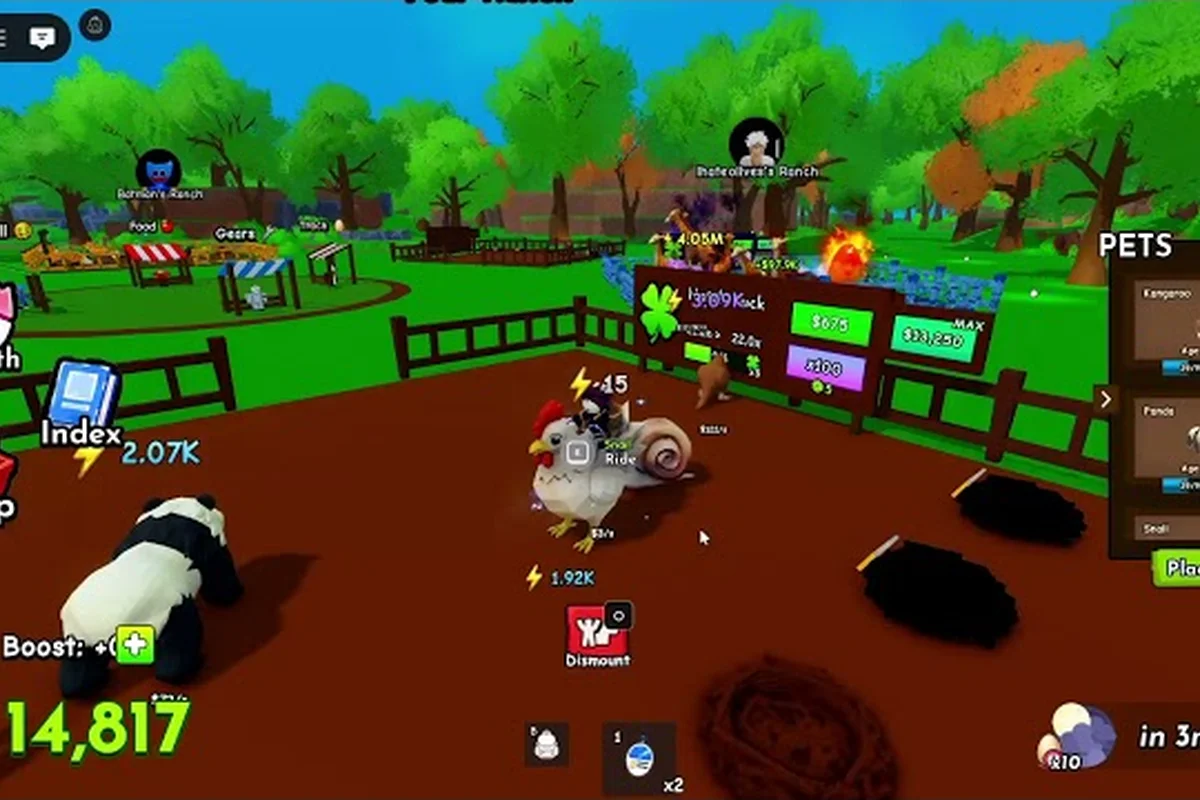
The Ride A Pet frozen mutation sits at the top of every speed-chaser's wishlist because it stacks directly onto a pet's base movement value, turning an average mount into a track-eating machine. According to the the Ride A Pet developer's Roblox profile, mutations are a confirmed mechanic that multiplies travel speed, but the developer has never published the odds for any named variant, including the frozen one. That gap is exactly why this guide exists: to translate scattered community logs into a practical framework so you can decide when, where, and on which pet to gamble for an icy boost.
The frozen variant belongs to a broader family of named mutations that also includes the Ride A Pet lightning mutation, the Ride A Pet fire mutation, the Ride A Pet lucky mutation, and rarer tiers like the Ride A Pet divine mutation and Ride A Pet secret mutation. Each one looks visually distinct and applies a different multiplier, but they all share the same root mechanic: a one-time windfall layered onto the pet you were already riding. Because rates are not published, treating them as a decision framework rather than a buyable upgrade is the only honest approach.
What the Frozen Mutation Actually Does
Speed Multiplier And Base Pet Synergy
The frozen mutation multiplies a pet's base travel speed by a factor that community testing places roughly in the 1.4x to 1.6x range, with the exact value varying patch to patch. The multiplier does not replace a pet's speed; it multiplies it, which means the higher the base stat on the pet, the more total distance the frozen mutation produces. Players who apply the boost to a slow common-tier pet gain noticeably less than players who apply it to a high-base legendary or divine.
This is why the community has settled on a clear rule: mutate your fastest pet first. Applying the Ride A Pet frozen mutation to a top-tier pet compounds with the pet's already strong base, while applying it to a starter gives you a modest gain that disappears the moment a better pet enters your roster. If you are building toward the strongest possible mount, working through the legendary pets overview before chasing mutations is the more efficient path.
Visual Effects And Identification
A frozen-mutated pet displays an icy blue glow, a faint snowflake particle trail, and an ambient cold mist around its body. These effects persist while the pet is active and are the easiest way to confirm that a mutation is actually live. Some players report that a rare "glacial" visual sub-variant occasionally appears, but that sub-variant is not officially documented and is generally treated as cosmetic rather than a separate tier.
| Visual Cue | Frozen Mutation | Lightning Mutation | Fire Mutation |
|---|---|---|---|
| Aura color | Icy blue | Electric yellow | Crimson orange |
| Particle effect | Snowflake trail | Spark arc | Ember wisps |
| Footstep audio | Crunching ice | Crackling static | Soft hiss |
| Estimated multiplier | ~1.4x – 1.6x | ~1.3x – 1.5x | ~1.25x – 1.45x |
The numbers in this table are community-reported averages rather than developer-confirmed values, so treat them as a rough bracket for planning rather than a guarantee. Patch updates can shift the multiplier window in either direction, and the only fully reliable indicator is what you actually see once the visual cue appears.
How Mutations Stack With Other Systems
Stacking With Rebirth And Cash Bonuses
A mutation is an independent multiplier that does not replace rebirth or cash bonuses; it stacks on top. A pet with a strong base speed that is also frozen-mutated and used by a player with a high rebirth count will therefore outperform the same pet used by a fresh character. This stacking behavior is part of why late-game players treat mutations as a finishing touch rather than a starter boost, because every other system is already maxed out by the time a mutation is applied.
In practice, that means two identical frozen-mutated pets can produce noticeably different travel times depending on the rider's rebirth tier, and that difference is one of the more common sources of "why is my friend faster than me" confusion in community threads. If you are still progressing through early rebirths, the Ride A Pet frozen mutation is worth more on a per-ride basis once you cross into the mid tiers, because the relative gain compounds with the rest of your build.
Stacking With Other Named Mutations
Players frequently ask whether they can apply more than one named mutation to the same pet. According to community data, a pet can hold one mutation slot at a time, so layering a Ride A Pet lightning mutation on top of a frozen variant is not currently possible. Some patches have experimented with a temporary second slot during events, but those windows are rare and usually announced through developer posts on the Ride A Pet community page.
When a second-slot window does open, the standard community advice is to pair a frozen mutation with a lower-impact variant like the Ride A Pet lucky mutation rather than another high-multiplier option, because the lucky variant modifies cash drops and has no overlap with the speed layer. Pairing two speed-focused variants on the same pet tends to be a wasted slot, since their multipliers conflict in a way that the older code path often de-prioritizes.
| Mutation Pairing | Speed Layer | Secondary Layer | Community Verdict |
|---|---|---|---|
| Frozen + Lucky | 1.4x – 1.6x | Cash bonus | Strong, no overlap |
| Frozen + Fire | 1.4x – 1.6x | 1.25x – 1.45x | Weak, partial conflict |
| Lightning + Fire | 1.3x – 1.5x | 1.25x – 1.45x | Weak, partial conflict |
| Frozen + Divine | 1.4x – 1.6x | Special perk | Strong, but rare window |
Community-Reported Odds And Drop Sources
Where The Frozen Mutation Actually Drops
Because the developer does not publish mutation rates, every estimate circulating in the community comes from player logs and Discord screenshots. The most consistent reports place the frozen mutation inside limited-time event windows, where boosted rates make the variant meaningfully more likely to roll. Outside events, drops are rare enough that most players consider them a windfall rather than a grind target.
The community also points to two secondary drop sources: high-tier eggs and very specific in-game triggers. Neither is confirmed by the developer, but both appear repeatedly in player logs, which is why the ride a pet egg chances guide treats them as soft signals rather than guaranteed mechanics. If you are already running egg openings as part of your routine, the chance of pulling a mutation as a side effect is a small but real bonus.
| Drop Source | Frozen Odds (Community) | Notes |
|---|---|---|
| Active event window | ~3% – 5% per roll | Highest reported rate |
| High-tier egg hatch | ~0.5% – 1% per hatch | Common side effect |
| Random server trigger | < 0.1% per hour | Rare and undocumented |
| Paid mutation reroll | Variable | Patch-dependent |
The "paid mutation reroll" row refers to the in-game system that lets players spend cash to re-attempt a mutation roll on a pet that is already eligible. The price and the cap change between patches, but the mechanic itself has been stable for several updates, which is why veteran players treat it as a budget option rather than a reliable farming path.
How To Read These Numbers
The honest framing is that these odds describe a probability range, not a promise. A 3% event rate means roughly three frozen mutations per hundred eligible rolls, but eligible rolls are not the same as total rolls: only pets that meet a hidden rarity threshold can actually receive a mutation, which means the real per-attempt probability for a given pet is much lower than the per-roll figure suggests.
Community testing on this distinction has produced the most useful rule of thumb in the scene: the base pet you are trying to mutate matters more than the roll itself. A rare-tier pet with a hidden mutation eligibility flag is meaningfully more likely to receive a frozen variant per attempt than a common pet, even when the displayed roll rate is identical. This is one reason why the best dragon and phoenix tier analysis matters for mutation planning; the highest-value pets also tend to be the ones with the strongest hidden eligibility.
Event Windows And Timing Your Rolls
Why Events Matter
Event windows are the only confirmed time when the developer changes the underlying mutation distribution, and they are the only time the Ride A Pet event mutation concept overlaps meaningfully with the frozen variant. During an active event, the rolls pool is expanded and certain named variants are weighted higher. In practice, this means an event is the only window where a player with a moderate cash reserve has a realistic chance of pulling a frozen variant without spending weeks rerolling.
The trade-off is that events also introduce their own temporary variants, and the community has observed that the developer's event weighting sometimes crowds out the frozen tier in favor of the new event-specific option. Checking the Ride A Pet event and devlog page before committing cash to mutation rerolls is therefore the single most useful preparation step. If the current event is heavily weighting a fire- or lightning-themed variant, the frozen rate is likely to be lower than usual, and a patient player may be better off waiting for the next window.
A Practical Roll Schedule
Most veteran players settle into a rhythm of saving mutation-eligible pets until the next confirmed event, then rerolling aggressively during the window itself. This approach compresses most of the variance into a short, predictable timeframe and avoids the slow bleed of cash that comes from rerolling during off-event weeks. The exact cadence depends on how often you log in and how much cash your current build produces per hour, but the shape of the schedule is consistent across the community.
| Phase | Action | Cash Target |
|---|---|---|
| Pre-event (1 week) | Save pets, do not reroll | 100% saved |
| Event launch (Day 1) | Reroll all eligible pets | Spend 50% reserve |
| Mid-event (Day 2 – 3) | Reroll newly hatched pets | Spend remaining reserve |
| Post-event (Day 4+) | Stop rerolling, resume saving | Rebuild reserve |
This schedule is not the only way to approach events, and players with larger cash reserves sometimes reroll continuously outside of events, accepting the lower per-roll rate in exchange for the chance of an early hit. The framework above is the one that the community most consistently recommends for mid-game players, because it balances the variance of the odds against the practical reality of a finite cash pool.
Strategy For Mid-Game And Late-Game Players
Which Pet To Mutate First
The first frozen mutation you apply should go to your single fastest pet, not your favorite one. The multiplier compounds with base speed, so the highest-base pet in your roster will produce the largest absolute gain per mutation. This sounds obvious in the abstract, but it is one of the most common mistakes in the community: players will mutate a pet they like cosmetically, then realize months later that the gain is negligible because the base was too low to start.
The second mutation is a harder call. By the time you have applied one frozen variant, you will likely have access to one or two more high-base pets, and the choice between them depends on your riding pattern. If you use a single mount for nearly all of your travel, mutate the second mount and run both in parallel. If you swap pets based on the map, consider mutating a specialist pet that excels on a particular terrain type, because the frozen boost amplifies a specialist's edge rather than spreading it thin.
When To Skip A Frozen Roll
There are two situations where rerolling for a frozen mutation is a bad idea even during an event. The first is when your current pet roster is not yet mature; applying a frozen variant to a pet you will replace in two weeks is a wasted roll regardless of how rare the variant is. The second is when an event is actively weighting a non-frozen named variant; in that window, your per-roll probability of pulling frozen is meaningfully lower, and the cash is better spent on a faster rebirth push or a better egg.
| Player Situation | Should You Reroll For Frozen? | Better Alternative |
|---|---|---|
| Pre-rebirth starter pets | No | Save for legendaries |
| Mid-tier roster, off-event | No | Save for event window |
| Strong roster, active event | Yes | Spend 50% reserve |
| Maxed roster, no active event | Maybe | Check event calendar first |
| Just acquired a new high-base pet | Yes | Apply on Day 1 of next event |
The "just acquired a new high-base pet" row is worth highlighting because it represents one of the cleanest reroll decisions in the game. A new high-base pet that is also mutation-eligible is the ideal target, and waiting one event window to reroll it is the most efficient use of a single cash reserve. Players who try to force the reroll on Day 1 of ownership usually spend more cash than necessary because they are not yet at the event-weighted rate.
Long-Term Outlook For Mutation Variants
Why The Frozen Variant Will Stay Relevant
The frozen variant occupies a specific niche that the other named mutations do not: a clean, high-multiplier speed layer with no conflicting secondary effect. The Ride A Pet lightning mutation is similar in multiplier but applies a visual effect that some players find distracting on long rides. The Ride A Pet fire mutation has a lower multiplier and a cosmetic effect that does not match every pet's color palette. The frozen variant's neutral, cool-toned visual is the most widely compatible with the rest of the game's art direction, which keeps it in demand even when newer variants rotate through events.
This long-term demand is also why the community treats the frozen variant as a status symbol rather than a pure speed upgrade. A player with a frozen-mutated top-tier pet is signaling both that they have the cash to reroll and that they have the patience to wait for the right event window. The status layer does not change the multiplier, but it does affect trade value when players swap pets in community-run markets, which is a small but real secondary benefit.
What Could Change In Future Patches
The developer has hinted at a possible mutation rework in community channels, though nothing has been confirmed in writing. The most commonly discussed change is a move away from named variants toward a tiered rarity system, in which "frozen" would become a tier label rather than a single specific multiplier. If that rework lands, the community framework described above will still hold, because the decision logic of "mutate your fastest pet, during events, with a cash reserve" does not depend on the specific naming convention.
The second possible change is a permanent second mutation slot, which would shift the strategic calculation toward finding complementary pairs rather than chasing a single best-in-slot variant. The community has already mapped the strongest pairings in the table above, so players who follow the current framework will be well positioned if that change goes live. Until then, single-slot optimization remains the dominant approach, and the Ride A Pet frozen mutation remains the most reliable high-multiplier choice for single-slot builds.
Frequently Asked Questions
What does the Ride A Pet frozen mutation actually do?
The frozen mutation multiplies a pet's base travel speed by roughly 1.4x to 1.6x, with the exact value varying by patch, and layers on top of rebirth bonuses without replacing them. Apply it to your highest-base pet for the largest absolute gain, because the multiplier compounds with the pet's existing speed rather than overriding it.
Is the Ride A Pet frozen mutation rarer than the lightning or fire variants?
According to community logs, all three are roughly similar in base rarity, but the frozen variant is more commonly tied to specific event windows. Off-event, the Ride A Pet lightning mutation and Ride A Pet fire mutation drop at a similar low rate, and the frozen variant only becomes meaningfully more common during cold- or winter-themed events.
Can I stack the Ride A Pet frozen mutation with the lucky or divine variants?
A pet can hold only one mutation slot in the current build, so direct stacking is not normally possible. During rare second-slot event windows, the community has had the most success pairing a frozen variant with the Ride A Pet lucky mutation, because lucky modifies cash drops and does not conflict with the speed layer.
Does the Ride A Pet event mutation replace the frozen variant during events?
Event-weighted variants can temporarily crowd out the frozen tier, but they do not delete it from the roll pool. The Ride A Pet event mutation concept refers to a temporary boost to a specific event-themed variant, and the frozen rate drops rather than disappears. The most efficient play is to reroll heavily at event start and stop once the event pool is clearly weighted away from frozen.
Which pet should I apply the Ride A Pet frozen mutation to first?
Always apply your first frozen mutation to your highest-base pet, because the multiplier compounds with base speed and produces the largest absolute gain. Players who apply it to a favorite but low-base pet usually regret the choice once they replace that pet with a stronger one, which is why the community treats base speed as the deciding factor rather than cosmetic preference.